

Pool Screening
Screening for the enclosure around your pool, so the deck, water and furniture stay comfortable and far easier to keep clean through the Florida seasons.
Explore pool screening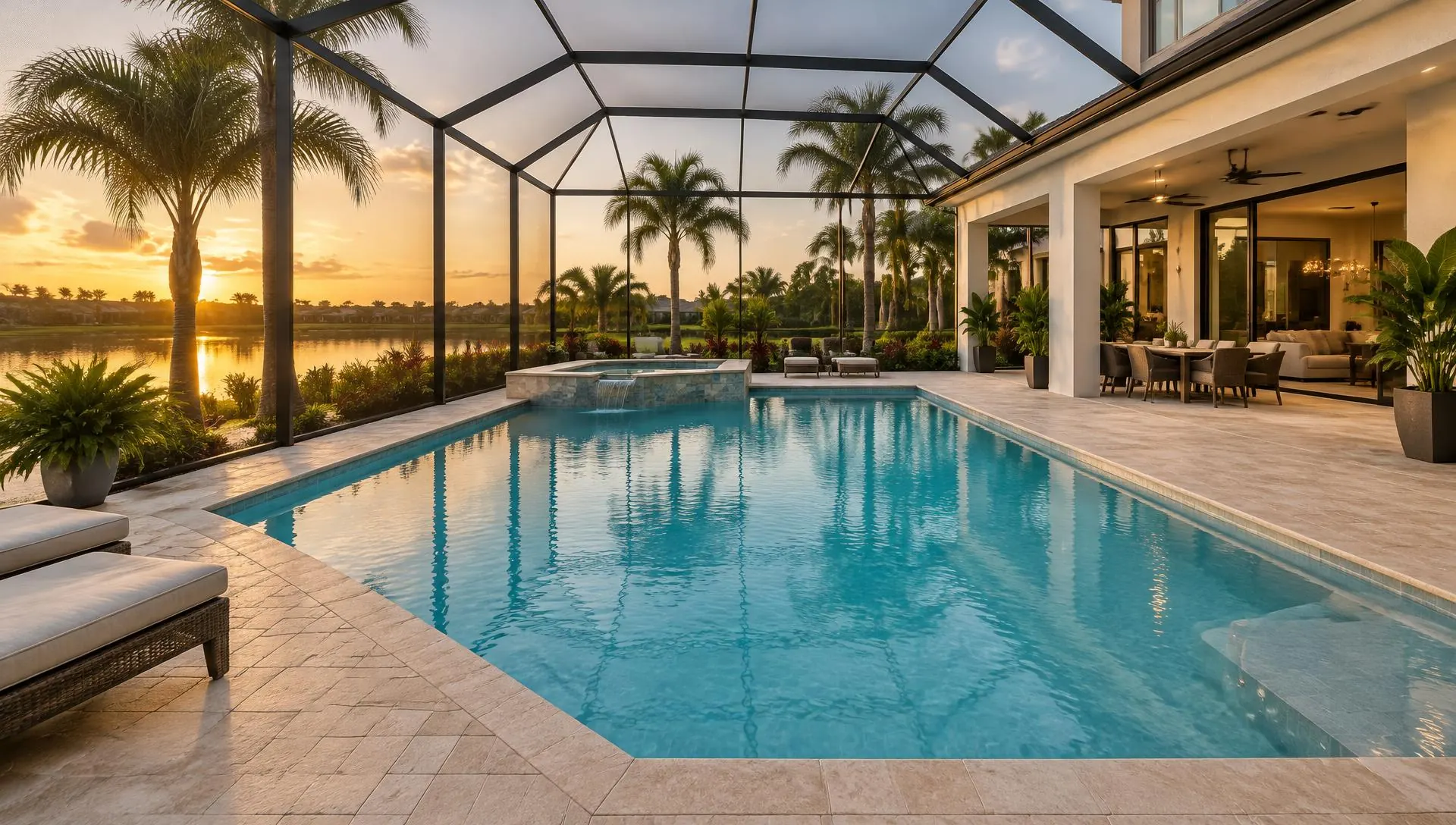
Bradenton Screen Company
Screening, screen repair and rescreening for Bradenton pools and lanais.
Free Estimates
On every screening project
Local Service
Bradenton & surrounding areas
Mon–Fri
7am–7pm
Sat–Sun
7am–5pm
Our Services
We focus on one thing: the screening that encloses your pool and lanai. Whether you need a single torn panel repaired or the whole enclosure rescreened, we’ll help you choose the approach that fits the condition of your screens.
Screening for the enclosure around your pool, so the deck, water and furniture stay comfortable and far easier to keep clean through the Florida seasons.
Explore pool screeningScreening for covered lanais and the outdoor rooms attached to your home, keeping the space open to breezes and views while holding insects outside.
Explore lanai screeningRepair for individual torn, punctured or loose panels on a pool enclosure, replacing damaged mesh so one problem area doesn’t become several.
See pool screen repairRepair for damaged lanai panels and mesh, from a single pet-scratched section to several panels that have pulled loose from the frame.
See lanai screen repairLarger-scale or complete replacement of enclosure screening, for when many panels are damaged or the material has aged across the whole structure.
Learn about rescreening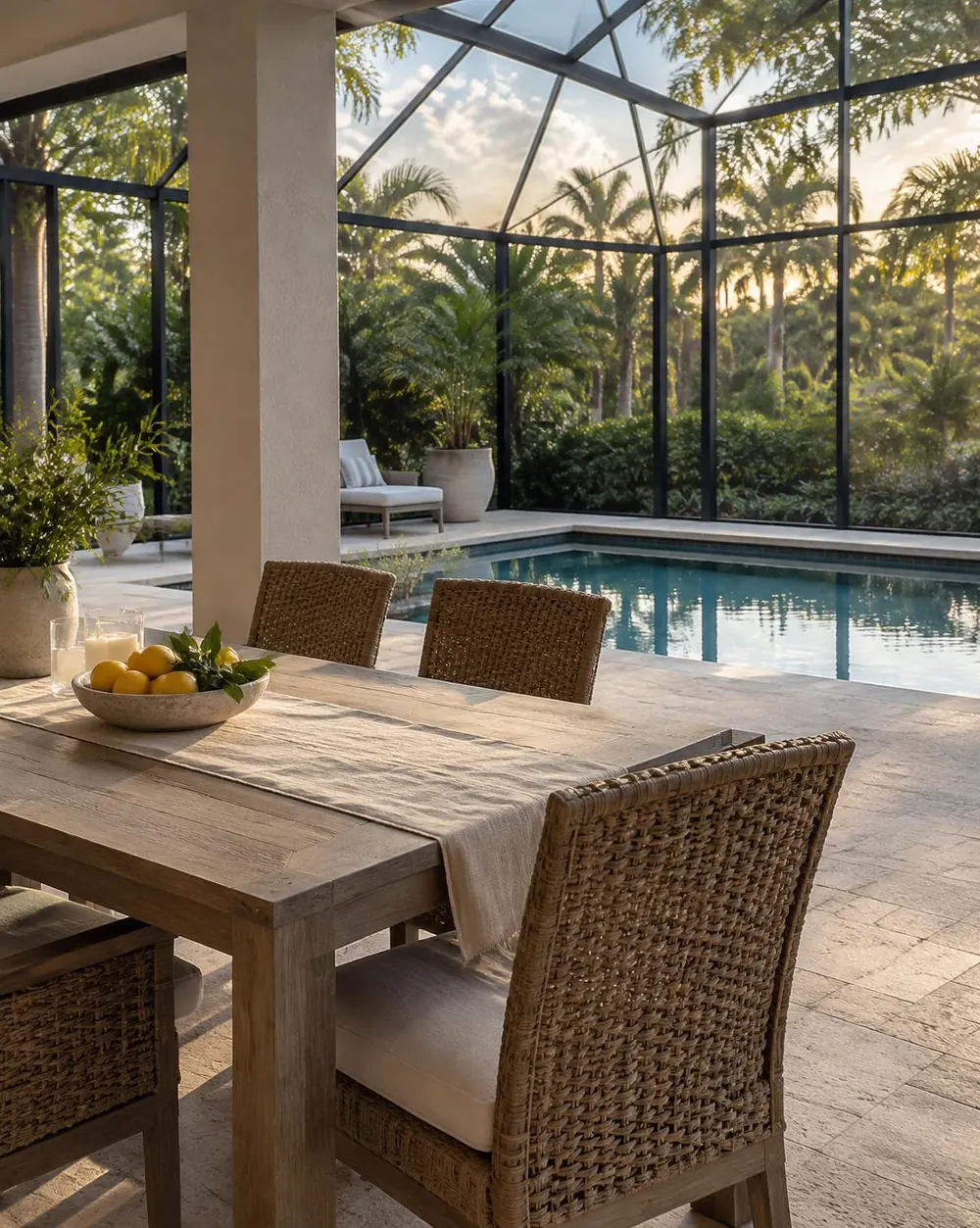
Outdoor Living
In Bradenton, the pool deck and lanai are often the most-used rooms in the house. Screening is what makes them usable for more of the year. It keeps mosquitoes, flies and other insects outside, holds back leaves and much of the debris that would otherwise land in the pool, and lets you leave the doors open to the breeze without inviting everything else inside.
Screening also shapes how your home looks. Taut, evenly colored mesh gives an enclosure a clean, architectural appearance from inside and out. Torn, sagging or faded panels do the opposite — and small openings let insects in long before they look like a real problem.
Florida is demanding on screen material. Strong sun, humidity, summer storms and wind-driven debris all take a toll, and even well-kept enclosures age over time. That is why the most useful question is rarely “is anything torn?” but “what condition is the screening in overall?” — which tells you whether a targeted repair or a broader rescreening makes more sense. If you’re considering a new or refreshed enclosure, you can learn more about screening for your pool enclosure.
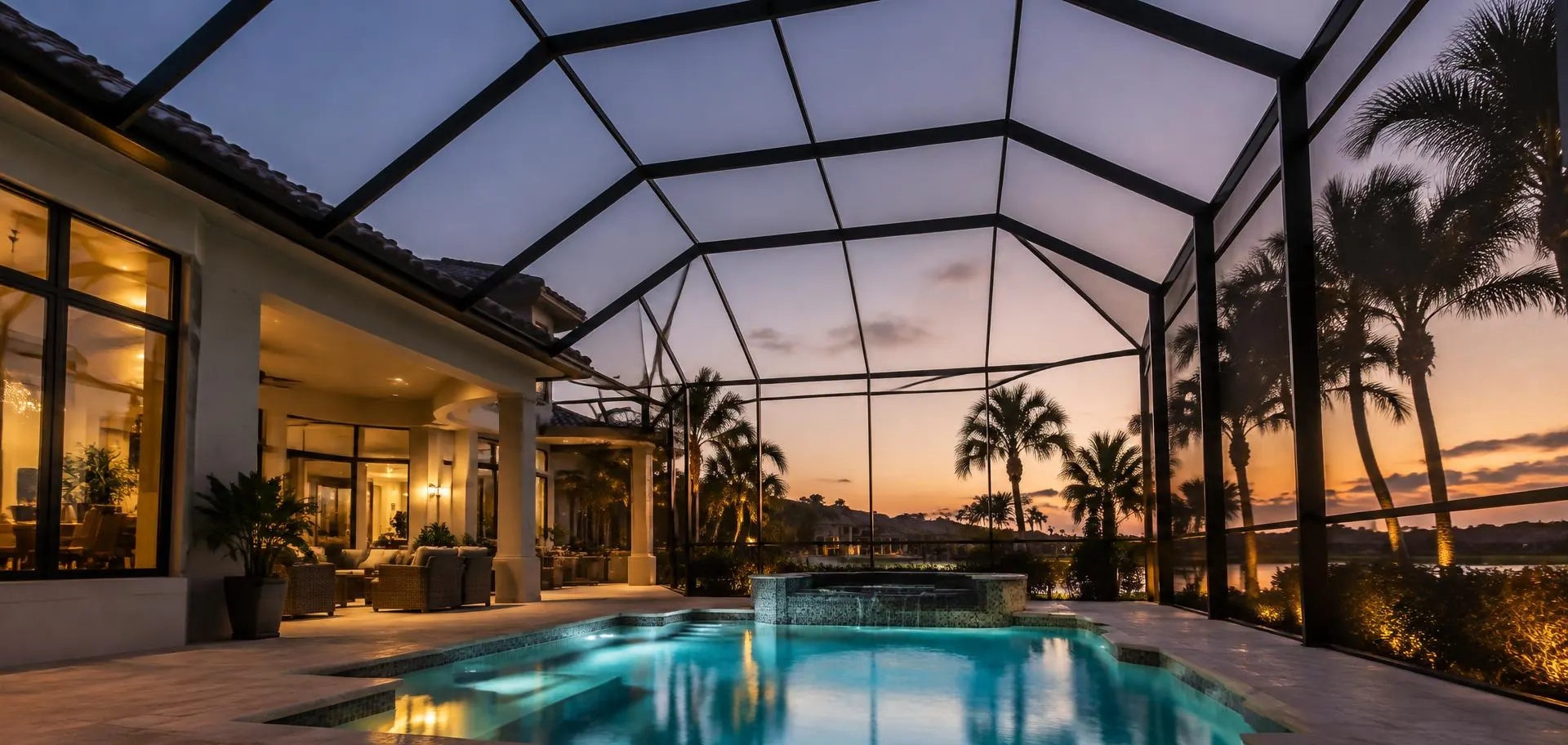
An enclosure should feel like part of the architecture — not an afterthought.
Why Homeowners Call Us
Our work centers on pool and lanai screening, screen repair and rescreening, so the conversation stays on what your enclosure actually needs.
Beyond the obvious tear, we consider the overall condition of your screening so the recommendation reflects the real state of the structure.
You’ll understand what we recommend and why before any work is scheduled. Estimates are free, with no obligation.
When a targeted repair is the sensible choice, we’ll say so. When rescreening makes more sense, we’ll explain the reasons.
We serve homeowners in Bradenton and nearby communities, and we understand how local weather affects screened outdoor spaces.
Open Monday through Friday 7am–7pm and weekends 7am–5pm.
Serving Bradenton
Across Bradenton, screened pools and lanais are part of everyday life — from established neighborhoods near the Manatee River to newer communities with enclosures built alongside the home. Many of these enclosures have been in place for years, and their screening has quietly absorbed season after season of sun, rain and wind.
Being local means we can look at your enclosure in person, talk through what we see, and recommend a practical next step, whether that is a single panel or a full rescreen. If you’d like to know more about the area we call home, you can learn more about Bradenton, Florida.
Google Reviews
Read reviews from Bradenton homeowners on our Google Business Profile.
What to Expect
Call us or request a free estimate online. Let us know whether you’re dealing with a torn panel, aging screening or a larger project.
We’ll talk through your pool or lanai, what you’ve noticed, and anything that matters to you, such as appearance or privacy.
We’ll explain the service approach we recommend — repair, rescreening or screening work — and what it involves.
Once you’re comfortable with the estimate and approve it, we’ll arrange a time to complete the work.
Homeowner Guide
A few practical points to help you decide what your pool or lanai screening needs.
Repair is usually the right choice when the damage has a clear cause and stays contained — a branch that came down in a storm, a chair pushed through a panel, or a corner a pet has scratched open. If the surrounding screen is still taut and has kept its color, replacing the damaged panels restores the enclosure without touching the rest.
When many panels are failing at once, or new tears keep appearing without an obvious reason, the material itself is often the issue. Rescreening replaces the screening across a larger area or the whole enclosure, giving a consistent appearance and avoiding a cycle of one-off repairs on aging mesh.
Once it is safe to do so, walk the enclosure and look up as well as around. Check roof panels for resting branches or fronds, look for punctures and loose panels along the walls, and note any mesh that has popped out of its channel. Remove light debris carefully, and avoid climbing on the enclosure. Small openings are easier to address before they spread.
A pool enclosure typically surrounds the pool and deck with tall walls and an overhead screened roof, so it faces sun and debris from above. Lanai screening usually encloses a covered patio beneath the home’s roofline, where the screen walls take most of the wear from foot traffic, pets and furniture. The right approach for each depends on its layout and condition.
Gentle care goes a long way. Rinse screens with a garden hose and a soft brush rather than a high-pressure washer, keep the roof clear of leaves, trim plants and branches away from the panels, and keep furniture from resting against the mesh. Regular, unhurried checks help you catch small tears while they are still simple repairs.
Rescreening is usually worth discussing when damage is no longer isolated: many panels are torn or sagging, the mesh looks faded or chalky across the enclosure, or the screen feels brittle and tears with little pressure. If you are repairing one panel after another, it is a good sign the material as a whole has reached the end of its useful life.
Yes. When damage is limited to a few panels and the surrounding screen is still in good condition, the damaged panels can typically be rescreened on their own. This is often the most practical option after a single incident such as a fallen branch or a tear from furniture.
If the rest of the enclosure is aging, a newly repaired panel can stand out clearly against older, faded mesh, and neighboring panels may continue to fail. In those situations a broader rescreening can give a uniform appearance and reduce repeated repair visits. We’ll talk through both options during your estimate.
There is no single answer. Lifespan depends on the material, how much direct sun and weather the enclosure receives, nearby trees, pets, and how the space is used. Rather than relying on a fixed number, it is more useful to watch for signs of aging such as fading, sagging and tears that appear without an obvious cause.
Common causes include strong wind and storms, falling branches and palm fronds, intense year-round sun, pets, children’s play, lawn equipment, and furniture rubbing against panels. Debris left resting on the roof panels can also stretch and weaken the screen over time.
In most cases, yes. A torn lanai panel can usually be rescreened without replacing the screening on the rest of the lanai, as long as the surrounding panels are in reasonable condition.
Pool screening refers to the enclosure built around a pool and deck, which often includes tall walls and an overhead roof section. Lanai screening refers to screening a covered patio or outdoor room attached to the home, usually beneath an existing roof. Both keep insects and debris out, but the scale and layout of the work are different.
Some screen materials reduce how easily people can see into a space, particularly during the day. If privacy is one of your priorities, mention it when you request your estimate so it can be considered in the recommendation.
Yes. Estimates are free. Call 941-297-4503 or request an estimate online and we’ll arrange a time to look at your enclosure or lanai.
We serve homeowners in Bradenton and the surrounding areas. If you are unsure whether your home falls within our service area, just call and ask.
Free Estimates
Tell us a little about your property and what you’ve noticed. A Screening Professional will follow up to arrange a time to take a look.
Prefer to talk it through? Call 941-297-4503.
Tell us about your pool or lanai and we’ll arrange a free estimate at a time that suits you.


